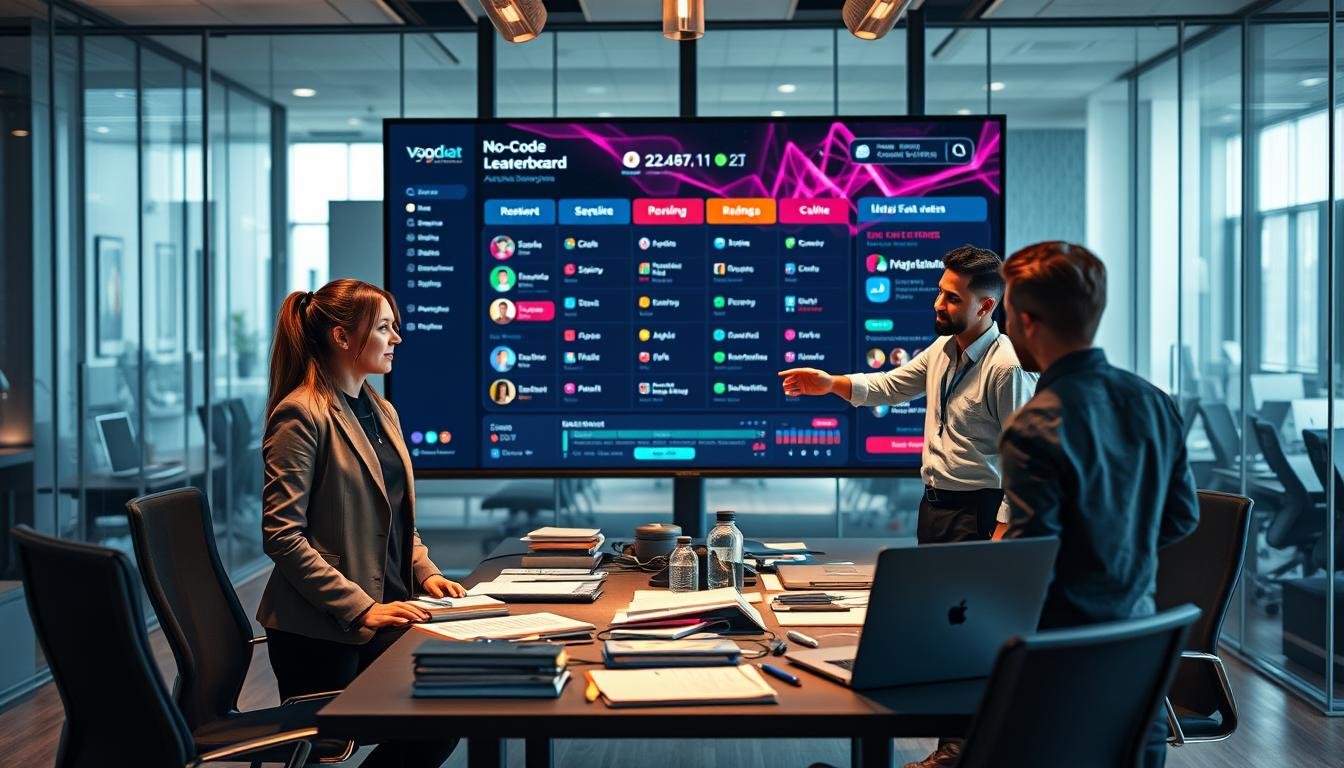
This guide introduces a powerful method for building a fully functional ranking display. You can achieve this without writing a single line of programming language. This approach makes the process accessible to professionals across many fields.
We will explore how modern platforms democratize the creation of interactive ranking tools. Business owners, community managers, and educators can now implement competitive elements easily. They do not need deep technical expertise or developer resources.
The article addresses the growing demand for engagement tools that deploy quickly. We focus on methods that eliminate traditional barriers. These solutions maintain professional functionality and strong visual appeal.
Readers will gain insight into the fundamental components of these ranking tools. You will understand how they integrate with existing web infrastructure. This provides real-time capabilities that motivate users and drive participation.
Key Takeaways
- Build a fully functional ranking display without any programming.
- The process is accessible to professionals from various industries.
- Understand the fundamental components of a ranking tool.
- Learn how to integrate these tools with your existing web platform.
- Discover various use cases across sales, education, and community management.
- Create polished and reliable results that look professional.
- Deploy engagement tools quickly and efficiently to motivate your audience.
Introduction to No-Code Leaderboards
The landscape of competitive ranking tools has transformed dramatically with recent technological advancements. Organizations can now implement sophisticated displays without traditional technical barriers. This represents a fundamental shift in how competitive elements are deployed.
Modern solutions provide an accessible path for businesses and educators. They can deploy ranking mechanisms that track performance effectively. These tools display results in visually compelling formats that capture attention.
Platforms address the needs of professionals who value gamification but lack programming skills. Visual editors and pre-built components enable rapid deployment of engagement tools. This approach motivates participants through transparent performance tracking.
These ranking systems prioritize user experience for both administrators and viewers. Intuitive interfaces encourage continued interaction and participation. The technology democratizes access to sophisticated engagement mechanics previously available only to large enterprises.
Understanding Leaderboards and Their Role in Engagement
Ranking systems serve as powerful catalysts for transforming how groups interact and achieve collective goals. These visual tools create immediate visibility into individual contributions and team progress.
When participants can see their standing relative to peers, they gain clear benchmarks for improvement. This transparency drives consistent effort and maintains momentum toward shared objectives.
Benefits of Leaderboards in Community Engagement
Community participation thrives when members witness collective achievements. Ranking displays celebrate milestones and highlight top contributors effectively.
These tools foster camaraderie by making individual efforts part of a larger narrative. Members feel invested in both personal progress and group success.
The psychological impact extends beyond simple competition. Participants develop stronger connections through shared goals and mutual recognition.
Encouraging Friendly Competition
Healthy rivalry motivates without creating negative tension. Properly designed ranking mechanisms emphasize personal growth alongside relative standings.
Friendly competition maintains positive energy while driving improved results. Participants push each other toward excellence through supportive challenges.
This approach reduces participant turnover by providing ongoing reasons to engage. The combination of recognition and progress tracking creates lasting motivation.
Exploring Gamification with Leaderboard Widgets
The strategic use of competitive displays can revolutionize how organizations motivate their members across various contexts. These tools transform routine activities into engaging experiences that capture sustained attention.
Widget-based ranking mechanisms apply game mechanics to professional environments. They track performance in sales, education, fitness, and workplace productivity. The approach leverages psychological principles that make games compelling.
Participants respond strongly to visual representations of their standing. These displays provide instant gratification when climbing rankings. They also offer clear targets for improvement when falling behind.
The integration of ranking tools into events creates focal points for community attention. Individual efforts become shared experiences where participants celebrate victories together. This transforms isolated activities into collective achievements.
Widget implementation dramatically simplifies adding competitive elements to existing platforms. Organizations can deploy sophisticated engagement tools without extensive technical resources. This accessibility makes gamification available to diverse professional contexts.
Implementing a no code leaderboard system for Engaging User Experience
Effective ranking solutions balance powerful functionality with intuitive design to maximize user engagement. The implementation focuses on creating seamless experiences for both administrators and participants.
Key Features and Functionality
Modern ranking tools offer flexible input mechanisms that accommodate various data sources. Customizable display options allow organizations to match their brand identity.
Automated calculations handle complex ranking logic behind the scenes. This eliminates manual processing while maintaining accuracy. Responsive design ensures optimal viewing across all devices.
Real-Time Data Management
Dynamic ranking displays require immediate reflection of changing information. Real-time updates create living systems that respond to participant actions.
This immediacy builds excitement as users watch their positions shift. The technology handles validation and error prevention automatically.
Instant feedback motivates continued participation throughout competition periods. Participants see how their efforts directly impact standings. This transparency drives ongoing engagement.
Automated data processing protects ranking integrity without manual oversight. The architecture seamlessly integrates collection, calculation, and display components.
Setting Up Your No-Code Leaderboard: Tools and Plugins
WordPress users have access to powerful plugins that simplify the creation of dynamic ranking displays. The right combination of tools handles every aspect from data collection to final presentation.
These solutions eliminate the need for complex programming while delivering professional results. Organizations can implement competitive elements quickly using familiar WordPress interfaces.
Overview of Gravity Forms
Gravity Forms serves as the foundation for capturing participant information and performance metrics. This versatile plugin offers extensive form-building capabilities without requiring technical expertise.
Users can design custom forms that collect scores, participant details, and various performance indicators. The visual editor makes field configuration straightforward for any use case.
Introduction to GravityMath
GravityMath extends form functionality with advanced calculation features essential for ranking systems. This add-on processes submitted information to generate accurate standings.
The tool performs mathematical operations like summing scores and calculating averages. It automatically organizes results in a clear format that updates with new submissions.
Together, these plugins create a complete solution for building engaging competitive displays. The setup process guides users through configuration steps using intuitive interfaces.
Designing Your Leaderboard: Customization and Visual Appeal
Creating a visually appealing competitive display requires careful attention to design elements that resonate with your audience. The right aesthetic choices transform functional ranking tools into engaging experiences that participants enjoy checking regularly.
Visual consistency builds trust and encourages ongoing participation throughout competitive periods. When the display feels integrated with your platform, users focus on the competition rather than noticing the tool itself.
Choosing a Design Skin That Matches Your Website
Select from pre-built design skins that align with your website’s visual identity. These professionally crafted layouts accommodate various aesthetic preferences from minimalist to vibrant styles.
The available options eliminate the need for custom graphic work while maintaining high visual quality. This approach ensures your ranking tool looks like a natural extension of your platform rather than an added widget.
Personalizing Participant Profiles and Icons
Add custom participant names and profile images to make your display more relatable. This personalization transforms anonymous data points into recognizable individuals that users can connect with emotionally.
Seeing familiar faces and names climbing the rankings creates genuine excitement among community members. These human elements make competition more meaningful and inspire others to improve their performance.
Enhancing Your Leaderboard with Custom Fields and Progress Bars
The ability to incorporate specialized metrics transforms standard ranking tools into personalized engagement platforms. This customization allows administrators to track performance indicators that matter most to their specific audience.
Custom fields provide the flexibility to adapt generic structures to specialized requirements. You can include achievements, ranks, or unique performance metrics alongside primary scores.
Adding Custom Fields for Unique Metrics
Custom field configuration enables tracking beyond simple numerical values. Administrators can display multiple data points that reflect comprehensive performance evaluation.
This approach accommodates complex scenarios where multiple factors determine success. Sales competitions might track both volume and deal count simultaneously.
Progress bars add powerful visual elements that show goal achievement. Participants see how close they are to reaching specific targets like points earned or milestones completed.
The widget supports various score types including whole numbers and decimal precision. Time-based scoring accommodates races where milliseconds matter for accurate ranking.
Progress visualization creates dual motivation from both competitive positioning and personal achievement. This comprehensive approach transforms basic ranking tools into complete performance management systems.
Integrating Real-Time Updates and Responsive Design
Modern competitive displays require two essential features to maintain user engagement: instant data reflection and universal accessibility. These elements work together to create compelling experiences that participants trust and regularly use.
Instant updates transform static ranking displays into dynamic systems. Participants see immediate feedback on how their actions affect current standings. This immediacy creates excitement and urgency that drives ongoing participation.
Real-time functionality eliminates frustration from outdated information. Users always view accurate positions when checking progress. This reliability builds confidence in the competitive framework.
Responsive design ensures optimal viewing across all devices. The display automatically adapts to desktop computers, tablets, and smartphones. Universal accessibility maintains engagement regardless of how users access content.
Mobile optimization is particularly important for competitive displays. Participants frequently check standings during breaks or after activities. Seamless mobile experiences support this spontaneous engagement.
Automatic processing handles data changes without manual intervention. New submissions trigger immediate ranking recalculations and display refreshes. This efficiency allows organizers to focus on program management.
Utilizing Advanced Styling with Custom CSS
Custom CSS unlocks complete creative control over your ranking display’s visual presentation. This approach allows designers to modify every aspect of appearance without altering core functionality. You gain the freedom to match exact brand specifications.
The styling capability covers typography, color schemes, spacing, and interactive effects. This ensures perfect integration with your existing website design system. Every visual element becomes customizable to reflect organizational identity.
Modern AI tools simplify the customization process significantly. You can describe desired styling in plain language and receive ready-to-use CSS. This reduces technical barriers for implementing advanced visual effects.
Custom CSS represents the ideal balance between simplicity and sophistication. Non-technical users benefit from default templates while design teams achieve pixel-perfect results. The same underlying framework supports both approaches efficiently.
Subtle refinements like hover effects and spacing adjustments enhance user experience dramatically. These details create visual hierarchies that guide attention to key performance metrics. The result is a polished display that feels native to your platform.
Optimizing Leaderboard Performance Across Devices
Optimizing your competitive display for different devices ensures universal accessibility. This approach guarantees that all participants enjoy smooth interactions regardless of their chosen platform.
Technical performance metrics like loading time directly impact user satisfaction. Quick rendering prevents frustration that occurs when rankings take too long to appear. Fast loading maintains engagement by delivering immediate feedback.
Cross-device consistency builds participant trust through familiar interfaces. Users develop confidence knowing the display works identically on computers and phones. This reliability encourages frequent checking and sustained involvement.
Mobile optimization addresses smaller screens with touch-friendly elements. Essential information remains visible while non-critical data condenses appropriately. This adaptation preserves motivational elements that drive continued participation.
Regular testing across actual devices identifies real-world performance issues. Network variations and browser differences affect the user experience significantly. Proactive monitoring prevents degradation as participant numbers grow.
Website performance optimization contributes to broader platform quality metrics. A well-functioning competitive display enhances overall traffic and engagement. This integration makes performance optimization a comprehensive concern.
Case Studies: Sales, Fitness, and Gaming Leaderboards
Documented implementations illustrate how ranking tools transform participation in sales, fitness, and gaming environments. These real-world applications demonstrate measurable improvements in engagement and performance metrics across diverse industries.
Real-World Examples of User Engagement
Sales organizations utilize competitive displays to track representative performance in dollar amounts. These tools automatically update as new deals close, providing immediate recognition for top performers.
Fitness applications leverage ranking mechanisms to maintain member motivation over extended periods. They track exercise completion, workout intensity, and challenge participation effectively.
Gaming platforms represent the original use case for competitive displays. Players compete for top scores and fastest completion times across various game types.
Sports competitions extend beyond professional athletics into amateur leagues. Ranking tools enhance event experiences by making standings visible throughout competition periods.
Dashboard integration shows how these displays function within broader performance management systems. They provide comprehensive visibility alongside individual metrics and team goals.
The documented examples reveal common success patterns across industries. Frequent updates and multiple achievement levels create sustainable motivation without excessive pressure.
Step-by-Step Guide: No-Code Leaderboard Setup Using Gravity Forms
The practical implementation of competitive tracking mechanisms starts with configuring input forms that capture essential performance metrics. This foundation ensures accurate data collection for all subsequent calculations.
Form Creation and Data Collection
Begin by creating a new form in WordPress using the Gravity Forms plugin. Select from pre-made templates or start with a blank canvas for complete customization.
For a sales tracking example, add three essential fields. Include a Purchase ID field using single line text format. Add a Sales rep dropdown listing all participants. Configure a Total amount field with currency format.
Embed the completed form on your website using shortcodes or blocks. This allows participants to submit performance data directly into your tracking system.
Configuring the GravityMath Summary Block
Create a new page for your competitive display and add the GravityMath Summary block. Connect this block to your data collection form as the primary source.
Configure key settings including grouping parameters and mathematical operations. Choose sum for total sales calculations or count for transaction numbers. Set sorting direction from highest to lowest for proper ranking.
The block generates an HTML table displaying real-time results. This automated approach eliminates manual calculations while maintaining accuracy.
Custom CSS enhancements can transform the basic table into a visually appealing display. The complete setup typically takes under an hour for familiar WordPress users.
Conclusion
The journey through creating dynamic ranking tools culminates in powerful engagement solutions that require minimal technical expertise. Modern platforms have democratized access to sophisticated competitive displays that previously demanded extensive programming knowledge.
These tools transform how organizations motivate participants across diverse applications. Sales teams track performance, fitness communities monitor progress, and educational settings recognize achievements. The same core principles drive engagement in each scenario.
Real-time functionality ensures participants always see current standings. Instant updates create excitement and maintain momentum throughout competitive periods. This immediacy builds trust in the tracking process.
Successful implementation balances visual appeal with functional reliability. Customization options allow displays to match brand identity while delivering professional results. The investment yields significant returns in participant motivation and performance improvement.
Whether your goal involves team motivation or individual recognition, these accessible solutions deliver measurable benefits. They transform passive participation into active engagement, driving the competitive behaviors that support organizational objectives.
FAQ
What are the main benefits of using a no-code leaderboard system?
Can I customize the appearance of my leaderboard to match my website’s design?
How do real-time updates work in a no-code leaderboard?
What types of data can I track and display on a leaderboard?
Is it possible to create a leaderboard for a one-time event versus an ongoing competition?
How can I ensure my leaderboard works well on both desktop and mobile devices?

Game developer with over 10 years of professional experience specializing in the mobile sector. George’s journey began with a passion for indie development, leading him to contribute to several successful mobile titles, including the critically acclaimed puzzle-platformer ChronoShift and the top-down strategy game Pocket Empires.