Welcome to your guide for crafting digital worlds that feel intuitive and immersive. A great interface acts as a silent guide, connecting people to the action without getting in the way.
After more than a decade of work on major titles, experts understand the common pitfalls. The most important question is often whether an on-screen element is even needed. Not every piece of information requires a visual component.
This knowledge is vital for creators of all sizes. A confusing layout can break a player’s focus, regardless of a project’s budget. Our goal is to make this topic approachable and practical.
We will explore core principles, modern tools, and real-world examples from successful projects. The best design feels invisible, allowing the audience to focus on the adventure.
This article offers concrete strategies and common mistakes to avoid. You will find actionable advice to improve your own creative work.
Key Takeaways
- A well-designed interface serves as a seamless bridge between the player and the experience.
- The primary challenge is often deciding if visual information is necessary at all.
- Poor design can disrupt immersion for audiences of any project scale.
- The most effective interfaces feel intuitive and almost invisible to the user.
- This guide provides practical, industry-tested strategies for improvement.
- Learning from real-world examples is crucial for successful implementation.
Understanding the Role of Game UI in Enhancing Player Experience
Immersion in a virtual world can be instantly shattered or beautifully sustained by the quality of its on-screen information. This digital layer serves as the primary communication channel. It translates a person’s intentions into actions within the adventure.
The Impact on Immersion and Usability
Think of the user interface as an invisible translator. It works behind the scenes to make interactions feel natural. When designed well, it empowers people to act quickly and confidently.
Poor design, however, creates confusion. It pulls attention away from the narrative and onto clumsy mechanics. This breaks the delicate suspension of disbelief that creators work so hard to build.
The best designs strike a careful balance. They provide essential data without cluttering the screen. This allows the audience to stay fully engaged in the experience.
The Bridge Between Player and Game World
An effective layout acts as a seamless bridge. It connects individuals directly to the environment and action. The goal is for the interface itself to go unnoticed.
People may not be able to describe a great design, but they always feel a bad one. Frustration arises when the connection feels weak. Excellent design, in contrast, creates a state of effortless flow.
The relationship between the participant and the digital world depends entirely on this clear communication. A strong bridge supports a deeper, more enjoyable journey for everyone involved.
Foundations of Game UI Design Principles
Building a professional interface requires mastering a set of fundamental design principles. These core concepts separate amateur attempts from polished, professional-grade results. Understanding these building blocks is essential before tackling complex implementations.
Key Elements That Define a Strong Interface
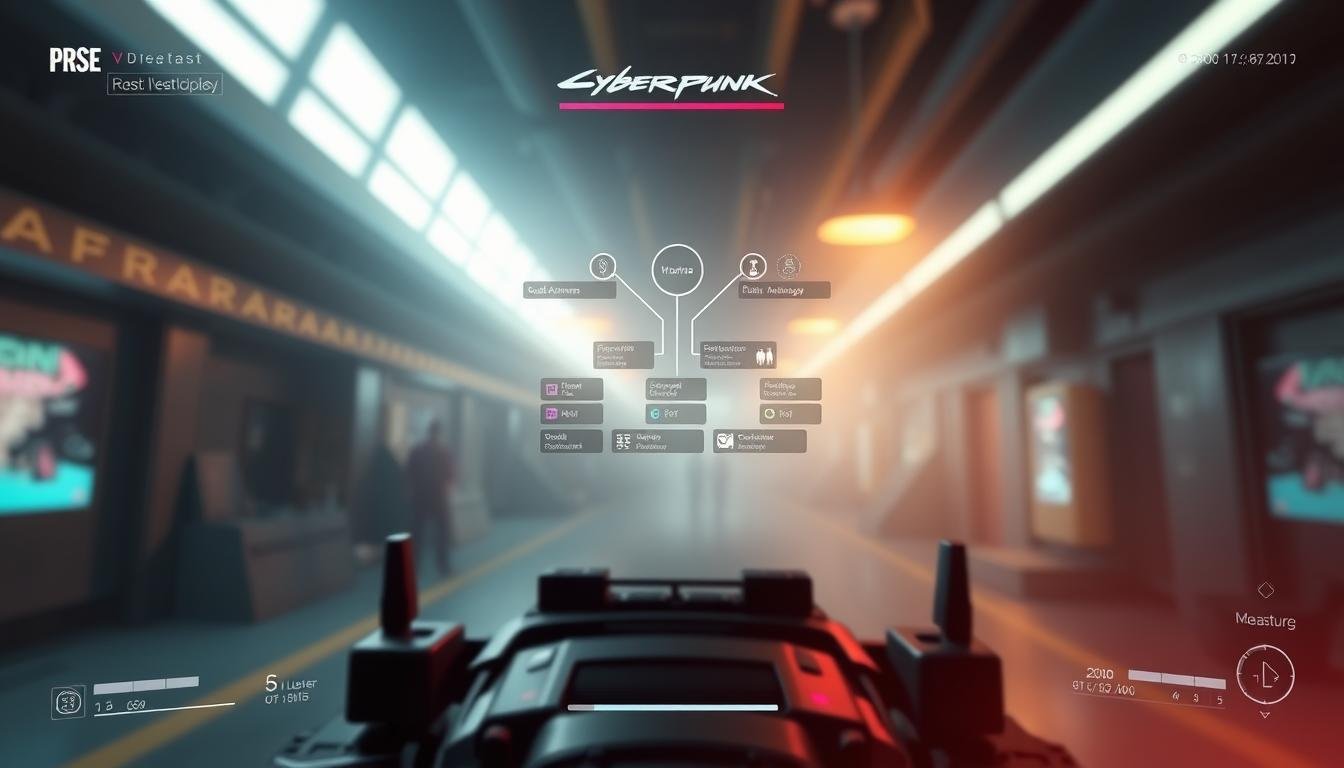
Several critical elements form the backbone of any successful system. Menus and navigation provide the roadmap to functions and settings. The Heads-Up Display (HUD) shows vital status information like health and resources.
Icons and visual cues represent actions and items through clear imagery. Buttons and controls enable direct interaction with the environment. Each part serves a specific purpose in the user’s journey.
Information hierarchy is crucial for effective game design. Designers must prioritize elements based on what people need during different moments. Combat requires different information than exploration or inventory management.
Consistency across all interface elements creates familiarity. This reduces cognitive load and helps users master new systems quickly. Predictable patterns established early make learning intuitive.
Strong design balances multiple competing demands. Aesthetics, functionality, accessibility, and immersion must work together. Thoughtful decisions about priority in different contexts create the best experience.
Exploring the Four Categories of Game UI
A powerful framework helps designers categorize interface elements based on their relationship to the game world. This system asks two simple questions. Does the information exist in the 3D space? Does it exist within the story?
The answers create four distinct types of user interfaces. Each type serves a different purpose and creates a unique feeling for the player.
Non-Diegetic vs Diegetic Interfaces
Non-diegetic elements are pure overlays. They do not exist in the 3D world or the narrative. A classic example is the health bar in fighting games like Street Fighter V.
This approach offers full design control and consistent placement. The drawback is a potential break in immersion if overused.
Diegetic design integrates information into the world itself. Think of the wearable gear in Metro: Last Light. These elements exist both visually and within the game’s fantasy.
This creates perfect immersion but comes with significant development costs. The placement and design of these elements are constrained by the world’s rules.
Spatial and Meta UI Innovations
Spatial UI anchors information directly into the 3D environment. Games like Splinter Cell: Blacklist use this for objective markers. This helps with orientation and creates cinematic moments.
Meta interfaces are an evolution of non-diegetic design. They don’t exist in the world but make sense within the narrative. The phone interface in Grand Theft Auto V is a perfect example.
The most successful projects mix all four categories seamlessly. Titles like Halo 5 combine non-diegetic maps, diegetic weapon readouts, spatial markers, and meta displays. This creates a rich and intuitive experience.
Designers should ask those two fundamental questions for every piece of information. This ensures the right interface type is chosen for each specific need within the game.
Common Mistakes in Game UI Implementation
Many development teams unknowingly sabotage their own projects through common interface oversights. Two particular errors consistently create frustrating experiences for audiences.
The Default Solution Trap
Designers often treat interface elements as the universal answer for every communication need. While overlays are versatile and cost-effective, they’re not always the best choice.
Other communication methods exist beyond traditional screen displays. Haptic feedback, sound effects, and environmental lighting can convey important information. Animation sequences and 3D models also serve as effective alternatives.
Constant Information Overload
The second major mistake involves displaying everything simultaneously. Most participants don’t need constant access to all data streams.
This approach creates a thick layer between people and the digital world. It clutters the visual space with irrelevant details that break immersion.
Before adding any new element, ask two critical questions. “Do we really need an interface component for this specific information?” Also consider, “Is this data relevant to participants at this exact moment?”
Selective display keeps focus on what matters most during each distinct context. This thoughtful approach prevents overwhelming audiences with unnecessary data.
Designing for Clarity and Minimalism in Interfaces
Minimalist design principles strip away unnecessary visual noise to reveal what truly matters in interactive experiences. This approach creates interfaces where every element serves a clear purpose.
The “less is more” philosophy focuses on displaying only relevant information at each moment. This prevents overwhelming users with data they don’t currently need.
Clean lines, ample white space, and limited color palettes define minimalist interfaces. Simple icons communicate instantly without requiring mental processing time.
Minimalism actually improves information delivery by reducing competition for attention. Critical data stands out clearly against simplified backgrounds rather than fighting decorative elements.
Some worry that minimalism creates sterile experiences, but thoughtful design proves otherwise. Strategic color choices and elegant typography can create beautiful, functional interfaces.
Half-Life 2’s monochrome beige interface demonstrates how minimalistic design becomes iconic. It served gameplay needs perfectly while remaining highly recognizable.
Achieving this balance requires questioning every screen element’s necessity. Remove anything that doesn’t directly serve user needs or enhance their understanding of the experience.
Prioritizing Accessibility and Consistency in Game UI
Accessibility features have transformed from afterthoughts to central pillars of thoughtful interface creation. Inclusive design now serves as a benchmark for quality, expanding audience reach while improving experiences for everyone.
Color, Contrast, and Readability Considerations
Thoughtful color choices ensure critical information stands out for all participants. High-contrast options and color-blind modes prevent visual barriers that might exclude some users.
Customizable text sizes and clear typography make interfaces readable across different viewing conditions. These accessibility options demonstrate respect for diverse needs within the audience.
Consistency in visual language helps people build mental models quickly. When menus, icons, and layouts follow predictable patterns, cognitive load decreases significantly.
This design approach benefits all participants by reducing frustration. A unified visual style creates familiarity that makes each new system easier to master.
Balancing consistency with contextual flexibility requires careful planning. The most successful interfaces maintain core principles while adapting to specific moments within the experience.
Effective “game UI tips” for Engaging Gameplay
Putting the audience at the center of your creative process transforms good interfaces into great ones. This approach focuses on human needs rather than technical possibilities.
Every choice should serve the person interacting with your world. This builds a deeper connection and a more satisfying journey.
Implementing User-Centric Enhancements
Start by prioritizing simplicity. A clean layout prevents confusion during intense moments. This allows for quick decisions without visual clutter.
Consistency is your secret weapon for building user confidence. Uniform buttons and menus create predictable patterns. People learn systems faster when the rules stay the same.
Never forget feedback. Visual and audio cues confirm that an action was received. This small detail builds immense trust in the system.
Information must be clear and prominent. Display only what is essential for successful play at any given moment. This keeps focus on the adventure itself.
Finally, embrace accessibility from the start. Features like scalable text and colorblind modes welcome a wider audience. Inclusive design improves the experience for everyone.
Crafting Intuitive Menus and Control Schemes
The gateway to any interactive experience begins with its navigation system. These initial screens set the tone for the entire journey ahead.
Main menus serve as the critical first impression. They should be visually engaging while remaining straightforward to navigate.
Menus as the Entry Point for Player Interaction
Successful designs balance practical function with artistic presentation. They reflect the project’s theme while providing clear pathways.
In-game menus act as essential pit stops during play. People need quick access to inventory or settings without losing momentum.
Thoughtful placement keeps the focus on the adventure. Well-designed navigation feels like a natural pause rather than an interruption.
Control schemes must feel instinctive during high-pressure moments. Button layouts and input mappings should become second nature.
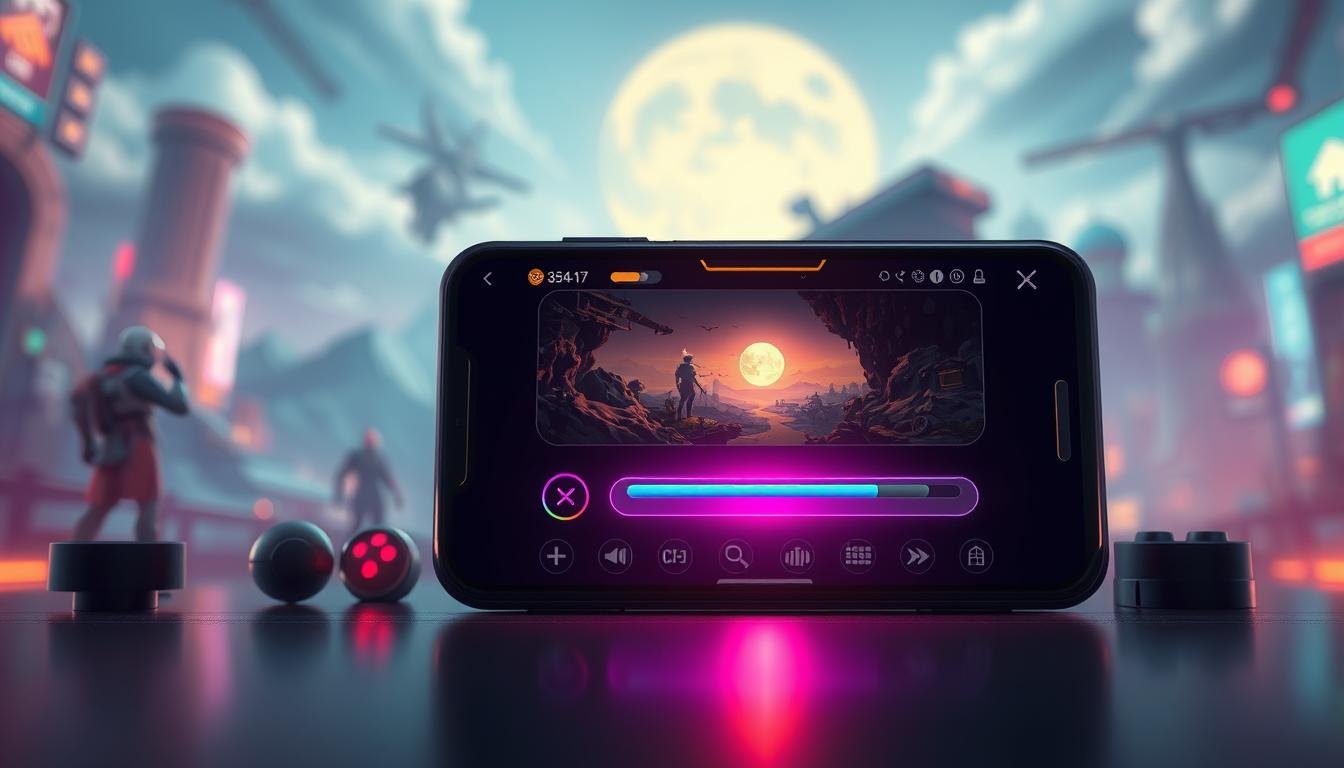
Mobile interfaces present unique challenges. Virtual buttons require careful positioning to prevent accidental activation.
Customizable options accommodate different preferences and physical capabilities. Allowing people to remap controls creates a more personal experience.
Testing with real users reveals what designers might overlook. Iterative feedback ensures the final system feels truly intuitive for everyone.
Integrating Visual Feedback and Eye-Tracking Considerations
Strategic placement of interface elements based on natural eye movement patterns enhances user comfort. This approach reduces strain during intense moments when quick information processing is essential.
Immediate visual responses create a vital connection between actions and system reactions. Button animations, color changes, and particle effects provide clear feedback without conscious effort.
These visual cues communicate state changes effectively. They help people understand the results of their decisions instantly.
Understanding natural eye movement allows for smarter element placement. Critical information should reside where attention naturally falls during gameplay.
Minimizing eye travel distance across screens reduces physical strain. It also creates mental connections between related components.
Fighting titles demonstrate this principle beautifully. Health bars emptying toward central timers allow quick checks during tense final rounds.
Effective design balances different cue intensities for various priorities. Critical alerts must break through focus while routine confirmations remain subtle.
Thoughtful creators choose appropriate feedback intensity and duration. This prevents overwhelming users with constant visual noise while maintaining essential communication.
Utilizing Cutting-Edge Tools for Game UI Design
The right digital toolkit can transform how creative professionals approach interface development for interactive experiences. Modern software solutions streamline workflows and enhance collaboration among team members.
Choosing appropriate tools saves valuable time and improves the quality of final results. Each platform offers unique advantages for different stages of the creative process.
Software Options: Adobe XD, Figma, Unity, and More
Adobe XD serves as an industry standard for prototyping interactive interfaces. Its seamless integration with other Adobe products creates a smooth workflow. Designers can test user flows before committing to full implementation.
Figma has gained popularity for its cloud-based collaborative features. Multiple team members can work simultaneously on the same project. This real-time collaboration improves communication and version control.
Sketch remains a favorite for high-fidelity vector-based designs. Its symbol libraries and reusable components ensure consistency across large projects. The extensive plugin ecosystem extends its functionality.
Unity offers a unique advantage by combining development and design capabilities. Creative professionals can test interfaces directly within the game environment. This provides immediate feedback on how designs function during actual play.
Selecting the right software depends on project complexity and team preferences. There’s no single solution that works for every situation. Mastering these tools requires practice but delivers significant long-term benefits.
Balancing Art, Functionality, and Immersion
Defining the critical focus area on screen is a foundational step for any successful interface. This is the zone where the most important action happens. It must remain clear of clutter to ensure users can react quickly and accurately.
In a fighting title like Mortal Kombat 11, this area centers on the characters and the space between them. No visual elements interfere with viewing hit distances during matches. This protects the core of the experience.
Optimizing the Visual Hierarchy for User Flows
Visual hierarchy uses size, color, and placement to guide attention. It ensures players process vital information instantly. This organizational principle is key to intuitive design.
Racing titles like Need for Speed Heat demonstrate this well. The critical view is a diamond shape covering the horizon and the player’s car. The interface is designed around this area, not over it.
Maintaining Immersion Without Distraction
The ultimate goal is to make necessary information feel like a natural part of the world. Art direction must serve functionality first. Creative integration helps elements blend seamlessly into the environment.
Techniques like context-sensitive displays and minimal persistent elements are vital. They provide data only when it’s needed. This approach sustains presence in the digital world without breaking the spell.
A great design creates a virtuous cycle where art, function, and immersion support each other. The result is an experience that feels greater than the sum of its parts.
Current Trends and Strategies in Game UI Design
The landscape of digital interface creation is constantly evolving with new player expectations and technological advancements. Modern designers are moving beyond basic functionality to craft experiences that feel alive and personal.
A significant trend is the embrace of clean, minimalist design. This approach removes decorative clutter to highlight essential information. It allows players to focus on the action without visual distraction.
Subtle motion and smooth animations are now standard. These elements make interfaces feel responsive and immersive. They guide attention and provide clear feedback for every interaction.
Personalization represents a major shift toward player-centric design. Many titles now offer adjustable layouts, scalable text, and custom color schemes. This flexibility accommodates diverse preferences and needs.
These strategies reflect a broader focus on creating intuitive and engaging experiences. The goal is to make every interaction feel seamless and natural over time.
Final Thoughts on Elevating Your Game Interface Experience
Mastering the art of digital interface creation means recognizing when to step back and let the experience take center stage. The most memorable systems become invisible partners in the player’s journey.
Exceptional examples like Assassin’s Creed’s minimalist approach and Zelda’s environmental integration demonstrate different paths to excellence. Each balances artistic vision with practical needs while keeping the user’s journey central.
Great design emerges from continuous testing and refinement. Initial attempts rarely achieve perfection, but persistent iteration based on real user feedback leads to remarkable results.
View interface work as a creative opportunity rather than a technical requirement. This mindset transforms functional elements into memorable moments that enhance the overall adventure.
Remember that excellent interface design is achievable at any skill level. Commit to understanding user needs, studying successful examples, and embracing the iterative process. Your dedication will create systems that feel effortless and intuitive.