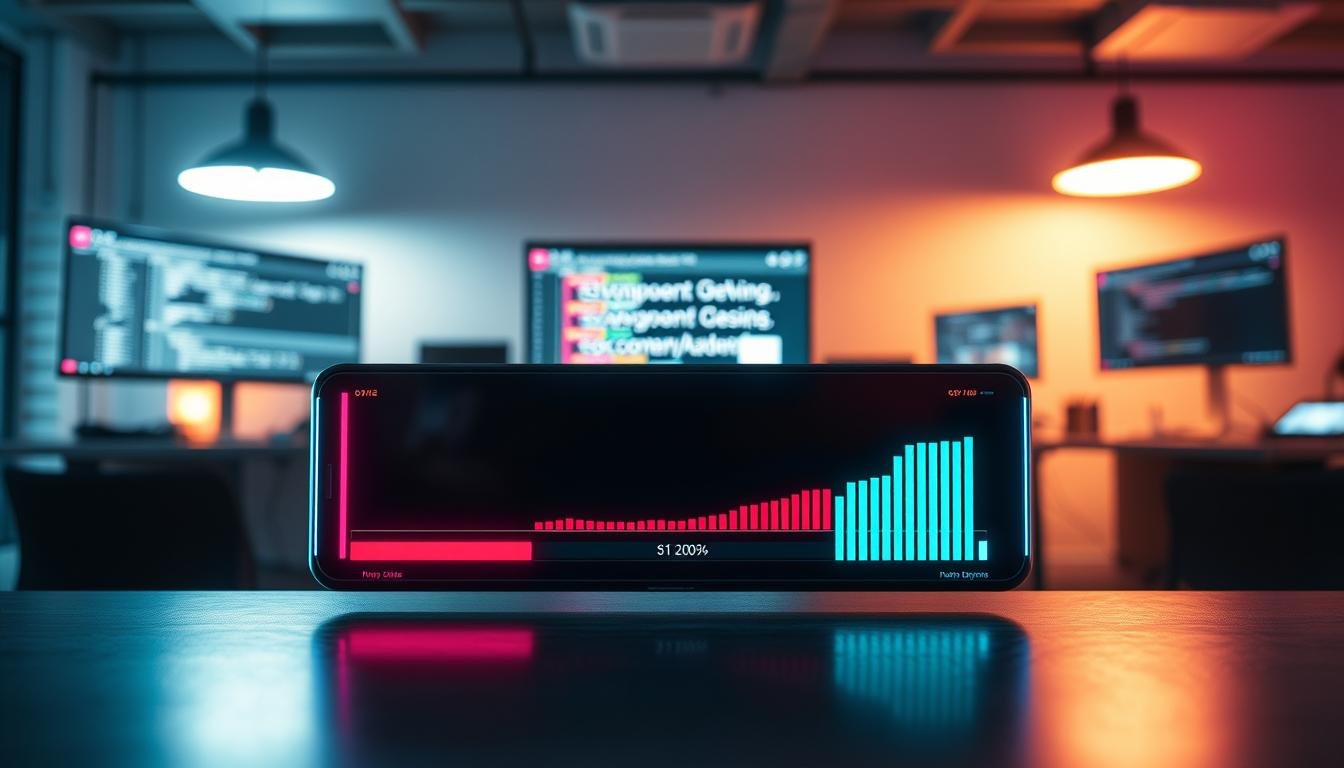
Visual feedback elements are crucial for modern applications. They keep users informed during operations that require waiting. A well-designed progress bar serves as this essential communication element.
These indicators show completion status for various processes. They enhance user experience by providing clear visual cues. Understanding their implementation in the game engine is valuable for developers.
This tutorial covers creating responsive loading indicators. You will learn to build components that update in real-time. The guide ensures your visual feedback systems work effectively.
Key Takeaways
- Visual feedback elements improve user experience during waiting periods
- Dynamic indicators provide real-time status updates for various processes
- Proper implementation requires understanding different development approaches
- These components serve as crucial communication tools with users
- The tutorial covers both linear and circular indicator types
- Accessibility considerations are important for inclusive design
- Script implementation ensures dynamic updates based on game operations
Understanding the progress bar ui unity Concept
The communication between software operations and users requires clear visual representation of ongoing processes. A progress indicator serves as this essential visual control element that shows completion status between defined minimum and maximum values.
These display components work best for operations with predictable durations. They accurately track advancement in tasks like asset loading and scene transitions. The system measures completion rates against established boundaries.
A critical distinction exists between finite and infinite loading indicators. Measurable advancement displays show actual completion data. Spinning animations indicate activity without specific time estimates.
The development environment offers multiple implementation options. Runtime interfaces use specific components for game displays. Editor tools provide specialized controls for development workflows.
Display persistence options include temporary and permanent modes. Temporary indicators vanish after operation completion. Persistent versions remain visible for repeating processes.
Accessibility considerations are crucial for inclusive design. Using progress visuals for indeterminate loads creates user frustration. Proper implementation ensures clarity for all audience demographics.
Context positioning provides important operational scope information. Container-based indicators show process-specific applications. This allows interaction with other interface elements during operations.
Setting Up Your Unity Scene for a Custom Progress Bar
Before implementing functionality, you must prepare your development environment. Proper scene configuration establishes the foundation for your dynamic display component. This preparation ensures smooth integration with your project’s interface.
Importing Assets and Configuring Sprites
Start by sourcing appropriate visual assets for your indicator. Circular designs require images with transparent backgrounds. Rectangular sprites work well for linear display types.
Import your chosen image into the project workspace. Change the Texture Type to “Sprite (2D and UI)” in the Inspector panel. This optimization ensures proper scaling and transparency handling.
Designing the Canvas and UI Elements
Create a new Canvas through GameObject -> UI -> Canvas. This container automatically generates the necessary EventSystem for interaction. It sets up the rendering pipeline for your interface elements.
Add an Image component to your Canvas by right-clicking and selecting UI -> Image. Assign your sprite to the Source Image property. Set the Image Type to “Filled” and choose “Radial 360” as the Fill Method.
The Fill Amount value controls how much of the image becomes visible. Duplicate this image and change its color to create a background layer. Adjust the width and height dimensions for proper visual hierarchy.
Add a Text component for numerical feedback or status messages. Set alignment to middle-center and adjust text height for readability. This completes your visual element setup.
Implementing Dynamic Behavior in Your Progress Bar
Dynamic behavior transforms static UI components into responsive feedback systems. This transformation requires scripting that connects visual elements to changing values. The system becomes interactive when code drives the visual updates.
Writing the SC_CircularLoading Script
Create a new C# script named SC_CircularLoading to control your indicator. Define public variables for Image loadingImage and Text loadingText components. Include a float loadingProgress variable with Range(0,1) attribute for testing.
The Update method continuously sets loadingImage.fillAmount equal to loadingProgress. This creates smooth visual transitions as the value changes. Conditional logic displays percentage text during loading and “Done” upon completion.
Proper component assignment ensures functionality. Attach the script to any GameObject and reference the appropriate UI elements. Test by adjusting the slider in Play mode to verify real-time updates.
Integrating Unity Scripting APIs and IMGUI Elements
Unity provides specialized tools for different scenarios. EditorUtility.DisplayProgressBar shows native dialogs for blocking operations. This is useful for asset importing processes that make the editor unresponsive.
The Progress utility class reports asynchronous task status to the Background Tasks window. This allows long operations to display updates without interrupting workflow. Both tools serve distinct purposes in development.
Connect your indicator to actual game operations using scripting APIs. Link fillAmount values to scene loading, downloads, or custom processes. This creates a system that responds to real application data.
Conclusion
Mastering visual feedback systems elevates the quality and professionalism of interactive applications. These components serve as essential communication tools between technical operations and user experience.
The implementation process combines conceptual understanding with practical execution. From asset configuration to script integration, each element contributes to the final result. Proper control over visual properties ensures responsive behavior.
Accessibility considerations and appropriate use cases define successful implementations. The SC_CircularLoading script demonstrates fundamental patterns applicable to various indicator types.
As you advance your skills, explore custom visual style options and performance optimization techniques. Consider integrating with asynchronous operations for more complex applications.
These foundational techniques provide the source for creating polished, user-friendly interfaces. They transform waiting periods into transparent communication opportunities.
FAQ
What is the primary function of a loading indicator in an application?
Which components are essential for creating a custom loading element in the Unity Editor?
How can I make the fill amount of my indicator respond to changing values in real-time?
Can I use the legacy Immediate Mode GUI (IMGUI) system to create this control?
What is the best way to test the dynamic behavior of my loading indicator during development?

Game developer with over 10 years of professional experience specializing in the mobile sector. George’s journey began with a passion for indie development, leading him to contribute to several successful mobile titles, including the critically acclaimed puzzle-platformer ChronoShift and the top-down strategy game Pocket Empires.