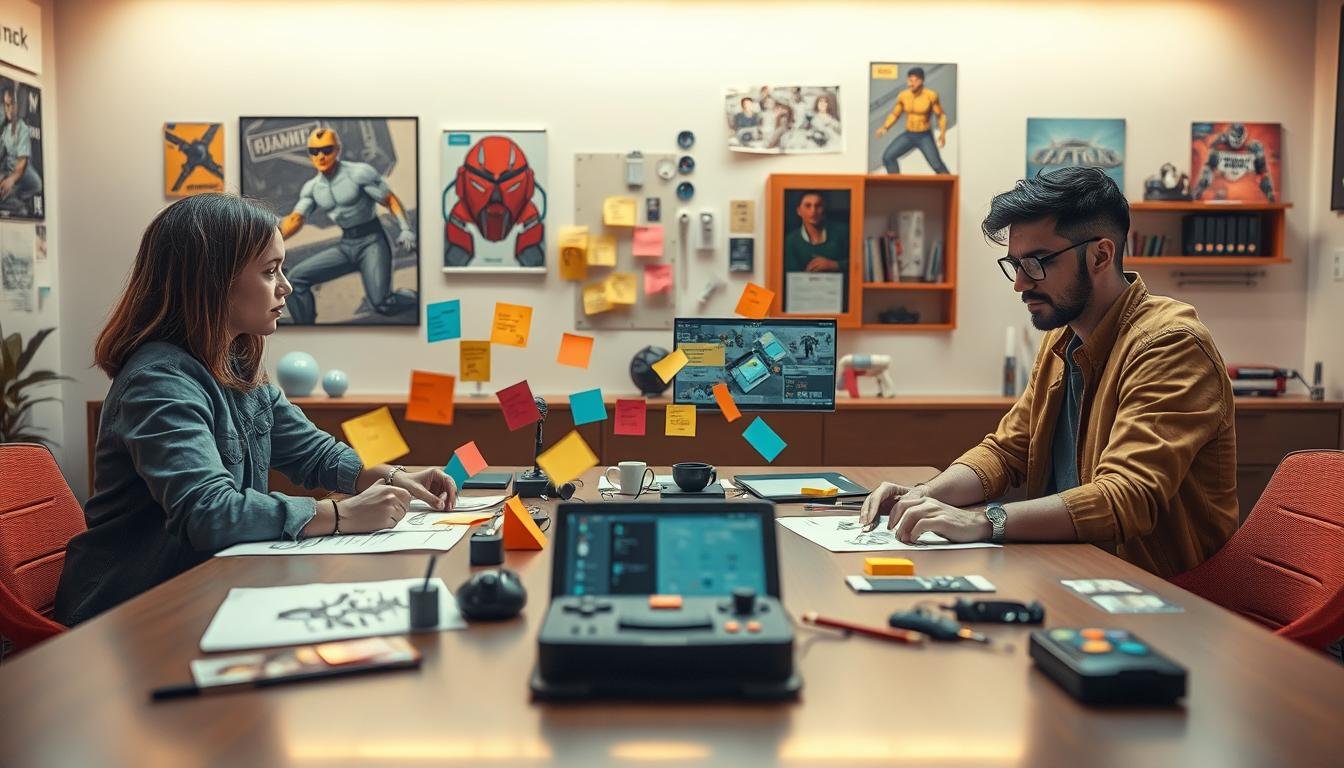

Creating a new interactive experience is an exciting journey. Many teams face a common hurdle right at the start. They must test their central idea without letting the project balloon in size. This early stage is about finding the fun factor.
Keeping a tight focus during initial creation is vital. It prevents wasted effort on features that players might not enjoy. A disciplined approach saves both time and money. It ensures the team builds on a solid foundation.
This guide offers practical steps for developers. You will learn to identify your project’s heart. We show how to build a simple test version. The goal is to answer big questions early. This reduces risk and sets you up for success.
These strategies work for solo creators and large studios alike. They are based on proven methods used across the industry. Mastering this skill is a key part of successful game development.
Key Takeaways
- Testing the main interactive loop early is crucial for project success.
- A focused approach prevents feature creep and saves resources.
- Identify the single most important element of your design first.
- Building a simple version helps validate your concept with players.
- Iterative feedback allows you to improve the foundation before expanding.
- This process reduces development risk and clarifies the project’s direction.
- Effective early testing is essential for both indie and studio projects.
Introduction: The Importance of Prototyping in Game Development
Transforming abstract ideas into interactive realities requires a strategic approach to early testing. This initial phase serves as the bedrock of any successful digital entertainment project.
The primary objective is to discover what makes an experience enjoyable quickly. Developers create basic, playable versions that showcase fundamental interactions. This allows for testing without polished graphics or complete content.
Effective early testing identifies potential issues when changes are least costly. Technical limitations and design challenges surface before significant resources are committed. Teams can then adjust their approach based on real player feedback.
Professional studios recognize that a well-executed test version establishes the foundation for all subsequent work. It answers critical questions about viability and audience resonance. This disciplined approach prevents building features that don’t serve the main interactive experience.
Key benefits of this foundational stage include:
- Validating concepts through actual player interactions
- Identifying technical and design challenges early
- Establishing a solid foundation for expansion
- Reducing development risk and resource waste
Understanding Game Scope and Its Impact on Development
The foundation of any successful digital experience lies in understanding the difference between what players see and what developers build. This distinction forms the basis of scope management.
Product scope defines everything a player encounters. It includes all features, characters, levels, and interactive elements. Think of it as the complete player experience.
Project scope covers the resources needed to create that experience. This includes team size, budget, timeline, and technical requirements. Each element in the product scope directly affects the project scope.
The relationship between these two dimensions is direct and proportional. Adding more features or content increases development time and costs. Clear boundaries prevent feature creep.
Poor scope assessment leads to extended timelines and budget overruns. Quality often suffers when teams try to do too much. Strategic reduction ensures project completion.
Early scope definition allows for informed decisions about what’s achievable. Teams can focus efforts where they matter most. This disciplined approach separates successful projects from troubled ones.
Defining Your Game’s Key Feature
Before building complex systems, creators must pinpoint the singular element that will drive engagement. This focal point becomes the foundation for your entire interactive experience.
Look beyond standard genre conventions when identifying this central attraction. Avoid selecting basic movement or typical combat systems as your main differentiator. Instead, seek something that surprises players or introduces fresh approaches.
The most effective features often subvert expectations or offer completely original mechanics. They create memorable moments that players will discuss and share. This uniqueness becomes your project’s strongest marketing advantage.
When your initial concept lacks obvious standout elements, transform ordinary mechanics into extraordinary ones. Add descriptive qualities that inject personality and specificity. Basic platforming could become momentum-based aerial acrobatics.
Your personal passion for a particular system serves as an excellent selection criterion. Enthusiasm fuels innovation and sustains motivation throughout development. Choose something that genuinely excites your creative team.
This disciplined focus on one primary feature prevents unnecessary expansion. It forces thoughtful decisions about what truly defines the player experience. Every additional element must enhance your chosen centerpiece.
Prototyping Core Game Mechanics with Minimal Scope
The most successful early builds emerge from disciplined feature elimination. This approach requires cutting everything but the absolute essentials that support your central interactive element.
Apply aggressive pruning to your concept. Remove any element that doesn’t directly enhance your primary feature. If you need mental gymnastics to justify its inclusion, cut it immediately.
The goal is to distill your project down to no more than three total features. Your main attraction sits at the center. Only one or two supporting elements should remain.
This reduction can fundamentally reshape your project’s identity. A story-rich adventure with unique puzzle systems might become a pure puzzle experience. Narrative exploration gets removed if it doesn’t enhance the puzzle-solving core.
Letting go of your fully-featured vision can be emotionally challenging. However, this temporary sacrifice creates a streamlined, testable build. You validate the fundamental concept before expanding into secondary systems.
Clear boundaries prevent feature creep during this crucial testing phase. Development effort concentrates on proving whether your central idea engages players. This focused approach saves significant time and resources.
Developing a Minimum Viable Product (MVP) for Your Game
The concept of a Minimum Viable Product provides a powerful framework for validating an interactive concept efficiently. This initial version is deliberately incomplete. Its sole purpose is to test whether the central idea is engaging.
Creating this product requires ruthless prioritization. You must strip away every element that is not absolutely essential to demonstrating the primary feature. The goal is a functional, playable build, not a polished final release.
This approach dramatically accelerates the initial creation phase. Consider a classic example: a platformer’s MVP might include only basic movement, a few power-ups, and a handful of enemy types. This focused build could be completed in months instead of years.
Judging the right amount of content is critical. Too little fails to show potential, while too much violates the “minimum” principle. The MVP must offer just enough variety to prove the concept’s worth.
The strategic value of this product extends far beyond internal testing. It serves as a concrete tool for pitching to publishers or launching an Early Access campaign. You gain a proven foundation for future expansion based on real player data.
Rapid Prototyping: Techniques to Cut Unexplored Territory
When developers venture into completely new interactive systems, they face exponential time investments. This “unexplored territory” requires extensive research and experimentation. Trial-and-error processes can easily double production schedules.
Building on familiar foundations offers a powerful alternative. Teams can iterate on proven concepts rather than starting from scratch. This approach dramatically reduces uncertainty and accelerates progress.
Rapid prototyping techniques focus on creating testable versions quickly. The goal is learning speed, not polished results. A functional prototype answers critical questions without lengthy development cycles.
Supergiant Games demonstrates effective iteration across their titles. Bastion, Transistor, Pyre, and Hades share core competencies while introducing fresh elements. This strategy minimizes risk while maintaining innovation.
Practical prototyping adapts to any skill level. Developers without programming experience can use platforms like Minecraft or Roblox. Those lacking art skills can leverage free asset libraries. Even pen-and-paper tests provide valuable insights.
Successful titles like Spelunky and Celeste emerged from earlier prototypes. This rapid testing validated core ideas before full production. The approach creates confident development paths and prevents costly mistakes.
Essential Tools and Resources for Effective Prototyping
Selecting the right development tools can dramatically accelerate the creation of testable prototypes. The modern digital landscape offers diverse platforms that enable rapid construction of interactive experiments.
Strategic resource utilization separates efficient projects from delayed ones. Proper tool selection reduces development time from months to weeks. This allows for faster iteration cycles and more experimental exploration.
Utilizing Game Engines and Asset Libraries
Powerful frameworks like Unity and Unreal Engine provide built-in systems for physics, rendering, and input handling. These engines dramatically accelerate prototype creation without requiring extensive programming knowledge.
Asset libraries offer placeholder graphics, 3D models, and sound effects. Developers can build functional versions without specialized art skills. This approach maintains focus on testing fundamental interactions.
Rapid Development and Testing Tools
Alternative platforms like Roblox or Twine cater to different skill levels and project types. Visual scripting systems allow non-programmers to create interactive experiences quickly.
Testing frameworks provide objective data about player interactions. Analytics tools and screen recording software supplement subjective feedback. This combination ensures comprehensive evaluation of early concepts.
Iterative Design: From Prototype to Polished Game
Building a polished final product requires a systematic approach to refinement. This transformation happens through repeated cycles of testing and improvement. Each iteration brings the experience closer to its full potential.
The journey begins with regular testing sessions throughout the entire development cycle. This continuous approach helps identify issues when they’re easiest to fix. According to industry reports, most developers consider this the most effective method for enhancing user experience.
Continuous Playtesting Strategies
Effective testing involves gathering input from actual players. They provide both subjective opinions and objective behavioral data. This combination offers valuable insights into what works and what needs adjustment.
Testing early and often prevents major problems later in the process. Catching issues before significant resources are invested saves both time and money. The feedback gathered helps shape each iteration cycle.
Effective Iteration and Feedback Loops
Successful iteration requires clear channels for collecting player input. Teams must analyze this feedback to identify patterns and priorities. Then they implement targeted improvements and test again.
The key is maintaining focus during each iteration cycle. Developers should address specific aspects rather than trying to fix everything at once. This disciplined approach ensures steady progress toward the final vision.
Balancing player feedback with creative vision is essential. Not all suggestions should be implemented directly. The goal is understanding the player experience to make informed design decisions.
Gathering and Implementing Player Feedback
Collecting meaningful input from actual players provides the roadmap for refining your interactive experience. This process transforms subjective opinions into actionable data that guides development decisions.
Effective feedback collection employs multiple approaches to capture comprehensive insights:
- Structured surveys reveal statistical patterns in preferences and satisfaction
- Direct observation uncovers real-time interaction issues players can’t articulate
- Focus groups facilitate discussions that identify common themes and reasoning
- Objective metrics track behavioral data like completion rates and difficulty spikes
Targeting your specific audience is crucial for gathering relevant feedback. Input from players outside your demographic can produce misleading results that don’t represent your intended player base.
Segment playtesters into cohorts based on personas and experience levels. This allows developers to understand how different audience segments experience the gameplay differently.
Implementing feedback effectively means identifying patterns across sources rather than reacting to individual opinions. Prioritize changes that address fundamental experience issues and validate improvements through follow-up testing.
Streamlining Features and Content to Maintain Scope
Successful interactive projects emerge from disciplined decisions about what to exclude as much as what to include. This continuous refinement process ensures your digital experience stays focused on its primary attraction.
Evaluate every proposed addition against a simple test. Does this element directly enhance your central interactive system? Features that serve as interesting tangents often dilute the player experience.
Removing peripheral systems can fundamentally reshape your product’s identity. What begins as a complex hybrid might become a pure expression of a single genre. This focused approach strengthens the overall experience.
Content requires similar strategic reduction. After feature cuts, identify which content becomes redundant. Then determine the minimum amount needed to showcase variety without repetition.
The goal is finding the optimal balance between demonstration and constraint. Too little content fails to reveal potential, while too much violates scope boundaries. This careful calibration saves development time.
Project management discipline becomes essential for maintaining boundaries. Regular review meetings and clear change control processes help teams resist expansion temptation. Documenting exclusion decisions provides valuable reference points.
This streamlined approach ensures your final product delivers a cohesive, engaging experience. It prevents feature creep while maximizing the impact of your central interactive system.
Integrating Narrative Scope with Gameplay Mechanics
Effective narrative integration occurs when the story emerges naturally from the player’s interactions with the core gameplay systems. This approach creates a unified experience where storytelling and interactive elements reinforce each other.
For most digital experiences, the narrative should support rather than dominate the primary interactive features. The relationship between systems defines the boundaries for appropriate storytelling.
Linking Story Elements with Core Features
Examine how your retained features connect thematically. Resource management combined with social systems suggests stories about scarcity and power dynamics. Survival mechanics introduce themes of community transformation under pressure.
Characters should embody the tensions created by gameplay systems. In a resource-focused survival game, different personalities might represent competing survival philosophies. Their interactions mirror the player’s strategic choices.
Creating a Consistent Game Tone
The visual style and emotional tone should reflect the core interactive experience. Tense survival mechanics benefit from harsh, unforgiving aesthetics. Playful physics systems inspire lighthearted storytelling approaches.
This alignment ensures the narrative feels integral to the player’s journey. The story provides meaningful context for actions taken through primary systems. This creates a cohesive design where every element supports the central experience.
Industry Insights: Prototyping Case Studies and Best Practices
Case studies from both major franchises and innovative indie titles demonstrate the power of focused experimentation. These real-world examples show how successful teams validate their central concepts before committing to full production.
Case Study: Super Mario Bros and MVP Adjustments
The original Super Mario Bros vision included an ambitious scope with multiple movement types, powerups, and extensive content. Developers identified player movement as the essential feature for their minimum viable product.
This focus allowed objective evaluation of supporting elements. The team removed co-op play and prioritized powerups that enhanced movement dynamics. Content was streamlined to showcase core interactions efficiently.
Rapid Prototyping Lessons from Indie Games
Independent creators often transform their projects through early testing. Move or Die evolved from a basic platformer into a multiplayer-focused experience. A Short Hike shifted from park management to exploration-centered design.
Supergiant Games demonstrates iterative refinement across titles like Bastion and Hades. Each project builds on established foundations while introducing fresh elements. This approach reduces uncertainty while maintaining innovation.
Successful titles like Spelunky and Celeste emerged from simpler versions that validated fundamental concepts. These examples reinforce key principles: identify the essential feature, build the minimum demo, and test early with actual players.
Conclusion
The journey from initial spark to finished product demands strategic restraint and disciplined execution. This approach transforms ambitious concepts into achievable realities.
Early scope definition provides a realistic roadmap for your entire development process. It helps answer critical questions about timelines and resource requirements. This clarity prevents feature creep and keeps teams focused.
Embrace the counterintuitive truth that cutting peripheral elements strengthens your final experience. Every component should serve the central vision. This creates a cohesive, polished result.
The principles outlined here offer a practical path forward. Identify your key feature, build a focused demo, gather feedback, and iterate systematically. This disciplined way of working increases your chances of creating an engaging product that resonates with players.
FAQ
What is the main goal of creating a prototype with minimal scope?
How do I identify the key feature to prototype?
What are some effective rapid prototyping techniques?
How can player feedback improve my prototype?
What tools are best for efficient game prototyping?
How does a Minimum Viable Product (MVP) differ from a full prototype?
Why is it important to manage scope during the design process?
How can I integrate a story without bloating the prototype’s scope?

Game developer with over 10 years of professional experience specializing in the mobile sector. George’s journey began with a passion for indie development, leading him to contribute to several successful mobile titles, including the critically acclaimed puzzle-platformer ChronoShift and the top-down strategy game Pocket Empires.