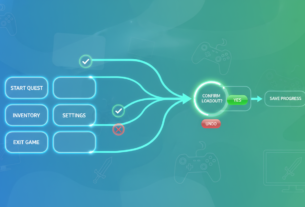

Every action you take in a modern video game creates a response. This back-and-forth relationship forms the foundation of player experience. When designed effectively, these cyclical processes build a powerful sense of agency and mastery.
Early gaming relied on simple score displays and basic sound effects. Today’s titles feature sophisticated mechanisms that adapt to individual skill levels. Visual cues, audio signals, and haptic responses work together seamlessly. They create immediate consequences for player decisions.
This dynamic interaction guides behavior while rewarding skillful play. Well-crafted responses help users understand cause-and-effect relationships. They transform random button presses into intentional strategies. The result is deeper immersion and sustained motivation to continue playing.
Key Takeaways
- Cyclical processes between actions and responses form the core of modern gaming experiences
- Effective design creates immediate understanding of cause-and-effect relationships
- Modern mechanisms adapt dynamically to individual player skill levels
- Multiple sensory channels (visual, audio, haptic) work together for immersion
- Well-implemented responses build player agency and strategic thinking
- These elements are crucial for maintaining user motivation and continued engagement
- The evolution from simple scoring to adaptive systems represents major design advancement
Understanding Feedback Loops in Interactive Game UI Systems
The concept of cyclical cause-and-effect relationships originates from scientific disciplines like biology and chemistry. These patterns form the basis for how many artificial mechanisms operate today.
Definition and Core Principles
At its simplest, a feedback mechanism involves taking output and reintroducing it as input. This creates a continuous cycle that influences ongoing experiences.
The core principle revolves around the input-output relationship. Each action generates a response that affects subsequent decisions. This dynamic creates responsive environments.
Comparing Examples from Gaming and Natural Systems
Natural world examples help illustrate these concepts clearly. Blood clotting demonstrates positive reinforcement – damage triggers chemical releases that accelerate healing.
Body temperature regulation shows negative balancing. Sweating cools the skin when temperatures rise too high.
Game designers apply similar principles to create balanced experiences. A leading player might trigger balancing mechanisms for others. This mirrors natural regulatory patterns.
Understanding these universal patterns helps creators build intuitive mechanics. The comparison establishes why these elements feel natural when properly implemented.
Exploring the Dynamics of Positive and Negative Feedback Loops
The balance between rewarding achievement and maintaining challenge relies on two complementary approaches. These mechanisms work together to create engaging experiences that adapt to user performance.
How positive feedback enhances player success
Positive reinforcement amplifies achievements by granting increased capabilities. This creates momentum that builds feelings of accomplishment.
Call of Duty’s killstreak system demonstrates this principle effectively. Consecutive eliminations without dying unlock powerful perks. These advantages make subsequent actions easier to execute.
Hades employs similar reinforcement through room completion rewards. Each successful encounter provides permanent upgrades and story progression. This motivates continued engagement despite the title’s challenging nature.
Mechanics behind negative feedback for challenge balance
Negative balancing prevents experiences from becoming trivially easy. These mechanisms increase difficulty in response to user performance.
Mario Kart’s blue shell targets the leading competitor specifically. This equalizing power-up gives trailing participants opportunities to catch up. The design maintains competitive tension throughout races.
Hades balances its reward systems with permadeath consequences. Dying results in loss of temporary progress and upgrades. This creates engaging tension across different skill levels.
Effective design requires careful calibration of both approaches. The sweet spot between frustration and boredom ensures consistent challenge and reward.
Designing Effective Feedback Loops in Interactive Game UI Systems
Successful interactive experiences depend heavily on how quickly and clearly systems acknowledge user choices. Thoughtful implementation creates environments where participants feel their decisions matter.
Implementing real-time responses
Immediate acknowledgment solidifies the connection between action and result. Designers must ensure responses occur within milliseconds of user input.
Visual signals like flashing icons or color changes provide instant confirmation. Auditory cues and haptic vibrations create multi-sensory acknowledgment. These elements work together to build understanding.
Balancing reward frequency with gameplay challenge
Finding the right reward rhythm prevents boredom and frustration. Frequent small acknowledgments maintain engagement throughout sessions.
Occasional significant rewards create memorable peak moments. The table below shows how different reward strategies affect participant experience:
| Reward Type | Frequency | Impact on Engagement | Best Use Cases |
|---|---|---|---|
| Minor Acknowledgments | Frequent (every 1-2 minutes) | Maintains consistent motivation | Basic actions, progression markers |
| Moderate Rewards | Regular (every 10-15 minutes) | Builds anticipation and satisfaction | Level completion, skill mastery |
| Major Achievements | Infrequent (hourly or less) | Creates memorable highlights | Significant milestones, story progression |
Effective design requires careful calibration between challenge and acknowledgment. This balance ensures participants feel appropriately tested while receiving meaningful recognition for their efforts.
Case Studies of Feedback Loops in Popular Games
The practical application of cyclical mechanics becomes clear when analyzing how major franchises implement these principles. These examples show how designers balance challenge and reward.
Mario Kart and the blue shell example
Mario Kart’s blue shell represents one of gaming’s most famous balancing mechanisms. This item specifically targets the leading competitor to maintain race tension.
The system gives trailing participants opportunities to catch up. It creates a more inclusive experience for players of different skill levels.
Call of Duty, Hades, and XCOM insights
Call of Duty’s killstreak system demonstrates positive reinforcement in action. Consecutive eliminations grant perks that make subsequent actions easier.
Hades masterfully combines both reward and consequence approaches. Each completed room provides permanent upgrades while permadeath resets temporary progress.
XCOM uses experience-based leveling where soldiers improve through combat success. This encourages strategic roster management across missions.
These games show different ways to implement effective response systems. Each approach reflects the title’s core design philosophy and target audience.
How Feedback Loops Enhance Player Confidence and Control
Player empowerment grows when every decision receives meaningful acknowledgment. Clear responses to choices build a powerful sense of agency and strategic capability.
Well-designed systems use multiple sensory channels to communicate outcomes. These channels work together to create comprehensive understanding.
Visual, Auditory, and Haptic Cues That Empower Players
Visual signals provide immediate confirmation of successful actions. Flashing symbols, color changes, and animated sequences make results unmistakable.
Auditory cues create emotional resonance with achievements. Sound effects and music shifts reinforce the significance of each outcome.
Haptic responses add physical dimension to the experience. Controller vibrations provide tactile confirmation that enhances immersion.
The table below compares how each modality contributes to user confidence:
| Feedback Type | Primary Function | Impact on Behavior | Implementation Examples |
|---|---|---|---|
| Visual Cues | Instant visual confirmation | Builds clear cause-effect understanding | Flashing symbols, winning line highlights |
| Auditory Signals | Emotional reinforcement | Creates memorable experience moments | Victory sounds, state change audio |
| Haptic Responses | Tactile acknowledgment | Enhances physical connection to actions | Controller vibration patterns |
Multi-modal approaches ensure players receive clear signals regardless of environment. This redundancy builds consistent engagement across different play sessions.
Predictable responses encourage experimentation and strategic thinking. Users develop confidence when they can anticipate how systems will acknowledge their choices.
The Role of Systems Thinking and Design in Feedback Loops
Viewing games as interconnected networks reveals hidden relationships between mechanics. This perspective helps creators understand how small changes create large effects.
Recurrent patterns emerge when studying multiple titles. These patterns represent general solutions to common balancing challenges.
Integrating Machinations Diagrams for Game Balancing
Machinations diagrams provide specialized visualization tools. They represent structural features and dynamic behavior accurately.
These diagrams generate quantitative data from thousands of simulated sessions. Designers can test concepts before creating playable prototypes.
The table below shows key advantages of this approach:
| Benefit Category | Design Impact | Development Phase |
|---|---|---|
| Early Testing | Identifies balance issues before coding | Pre-production |
| Pattern Recognition | Reveals recurring mechanic relationships | Analysis |
| Risk Reduction | Prevents unintended consequences | Implementation |
Everything connects within complex environments. Effects travel in unpredictable directions across interconnected elements.
Holistic analysis considers progression, economy, and narrative together. This prevents isolated thinking that creates imbalance.
Incorporating Psychological Principles in UI Feedback
The human brain’s reward system plays a crucial role in how people respond to digital experiences. Understanding these neurological processes helps designers create more engaging interfaces.
Dopamine release creates pleasurable sensations when users achieve goals. This biochemical response reinforces successful actions, making people more likely to repeat them.
Dopamine Responses and Reward Systems
Immediate acknowledgment triggers stronger neurological responses than delayed feedback. The timing of rewards significantly impacts learning and satisfaction levels.
Variable reward schedules create compelling engagement patterns. Unpredictable timing within appropriate bounds maintains user interest more effectively than perfectly predictable patterns.
The table below shows how different timing approaches affect user experience:
| Timing Approach | Neurological Impact | Behavioral Effect | Best Applications |
|---|---|---|---|
| Immediate Response | Strong dopamine release | Rapid learning reinforcement | Skill acquisition, basic actions |
| Short Delay | Moderate chemical response | Builds anticipation | Progression milestones |
| Variable Timing | Sustained engagement | Maintains curiosity | Long-term retention |
Ethical design considers individual differences in reward sensitivity. Effective systems accommodate varying preferences without manipulation.
Well-implemented psychological principles accelerate skill development. Clear signals about action effectiveness help users master complex systems more quickly.
Accessibility and Inclusive Design in Feedback Loop Systems
Creating accessible gaming experiences requires thoughtful consideration of how different players receive information. Effective design ensures that all people can benefit from confidence-building mechanisms.
Visual signals must work for players with color vision differences. Using patterns and outlines alongside color coding helps everyone distinguish important elements.
Using visual cues and non-verbal signals
Non-verbal communication provides essential information without language barriers. Blinking icons and distinct sounds create clear understanding for diverse users.
Multi-modal approaches ensure redundancy for different sensory needs. When one channel isn’t available, others can convey the same message effectively.
Design considerations for diverse audiences
Cultural meanings affect how people interpret colors and symbols. Red might signal danger in one culture and luck in another.
Customization options empower users to adjust signals to their preferences. This way, the design serves individual needs rather than assuming uniformity.
Accessible features benefit all players by creating clearer communication systems. Thoughtful implementation makes gaming more welcoming for everyone.
Implementing Feedback Loops in Modern Game Development
Modern game development integrates sophisticated mechanisms that automatically adjust to player performance. These approaches create personalized experiences without manual difficulty selection.
Strategies for Dynamic Difficulty and Adaptive Responses
Combining reinforcement and balancing approaches creates self-regulating systems. This maintains optimal challenge across diverse skill levels.
Resident Evil 4’s subtle adjustments and Hades’s death-as-progression demonstrate successful implementations. Their designs maintain engagement through clever response patterns.
Emerging technologies enable more personalized experiences. AI analyzes behavior to tailor difficulty and reward timing dynamically.
| Implementation Approach | Technical Requirements | Player Impact | Best Applications |
|---|---|---|---|
| Rule-Based Adjustment | Simple condition checks | Predictable balancing | Linear progression games |
| Machine Learning Systems | Data processing capabilities | Highly personalized responses | Open-world and RPG titles |
| Hybrid Models | Balanced resource usage | Consistent yet adaptive | Multiplayer competitive games |
Technical considerations include latency reduction and cross-platform consistency. Ethical design ensures fairness while maintaining engagement.
Conclusion
The journey from initial action to final achievement relies on responsive design principles. These mechanisms create dynamic environments where every choice matters.
Their fundamental role is to build confidence through clear cause-and-effect relationships. This understanding transforms random inputs into strategic behavior over time.
Designers must balance immediate gratification with long-term engagement. They create patterns that reward success while maintaining appropriate challenge for all users.
Looking ahead, technology will enable more personalized experiences. The ethical implementation of these complex systems remains a critical responsibility for creators.
Mastering this craft is essential for crafting memorable worlds. It ensures people feel a true sense of control and progress throughout their entire experience.

Game developer with over 10 years of professional experience specializing in the mobile sector. George’s journey began with a passion for indie development, leading him to contribute to several successful mobile titles, including the critically acclaimed puzzle-platformer ChronoShift and the top-down strategy game Pocket Empires.